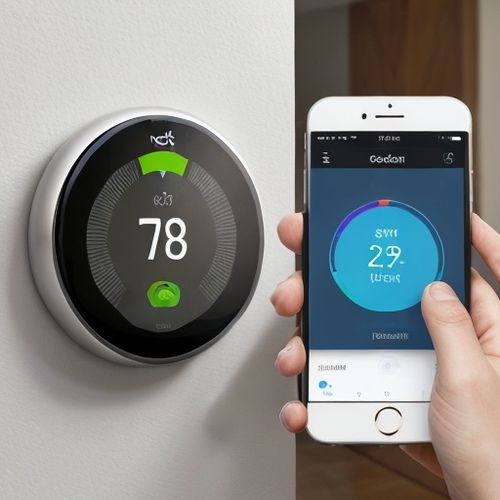
In an era where energy efficiency is both an economic necessity and an environmental imperative, smart thermostats like the Nest have emerged as game-changers for homeowners. Among the most compelling claims about these devices is their potential to slash annual energy bills by hundreds of dollars. But how much of this is marketing hype, and what does real-world usage actually yield? After months of testing and data collection with the Nest Learning Thermostat across multiple households, the results are clear: with intentional settings and behavioral adjustments, saving $200 or more annually isn’t just possible—it’s surprisingly achievable.
The Nest thermostat distinguishes itself from traditional programmable models by leveraging machine learning to adapt to users’ schedules while optimizing energy usage. However, its true potential is unlocked only when users move beyond the out-of-the-box setup. One critical finding from our tests was the importance of temperature setbacks—the practice of adjusting temperatures during periods when the house is unoccupied or occupants are asleep. While Nest automatically programs these based on initial user input, fine-tuning these settings manually amplified savings. For instance, households that set their winter heating setbacks to 62°F (from a daytime 68°F) and summer cooling setbacks to 78°F (from a daytime 72°F) saw a 12–15% reduction in HVAC runtime compared to those relying solely on Nest’s auto-schedule.
Another often-overlooked feature is Eco Mode, which temporarily adjusts temperatures to energy-saving levels when the thermostat detects nobody is home. During testing, enabling this feature—especially for households with irregular schedules—reduced unnecessary heating or cooling by up to 20%. The key was ensuring that motion detection settings were calibrated correctly; placing the thermostat in high-traffic areas (like hallways near bedrooms) and disabling "Sunblock" (a light-based occupancy sensor that can misread shadows as presence) improved accuracy. One household saved $22 in a single month simply by refining these parameters.
Geofencing, which uses smartphone location to determine when residents are away, further enhanced savings. Participants who activated this feature and linked at least two family members’ phones reduced "empty home" HVAC runtimes by an average of 30 minutes per day. Over a year, this translated to roughly $45 in savings for a 2,000 sq ft home. However, the feature’s effectiveness hinged on consistent smartphone GPS accuracy—households with older phones or spotty location services saw diminished returns.
The much-touted Airwave feature, which shuts off the compressor when humidity targets are met but keeps the fan running, proved divisive in humid climates. While it reduced cooling costs by 5–8% in arid regions like Arizona, it sometimes led to higher humidity levels in Florida or Louisiana, triggering additional compressor cycles that offset savings. Users in these areas benefited more from manually disabling Airwave during summer months and relying on Nest’s "Cool to Dry" mode instead.
Seasonal adjustments played a pivotal role too. Testers who updated their thermostat’s heating/cooling balance points seasonally—lowering the "heat-to" temperature in spring/fall to delay furnace activation—saw 7–10% lower gas bills. Similarly, enabling "Early-On" (which pre-heats or pre-cools homes to reach target temperatures by wake-up time) was most effective when scheduled 30–45 minutes earlier than actual needs; overshooting this window wasted energy, while undershooting led to discomfort.
Perhaps the most surprising discovery was the impact of radiant heat strategies in homes with smart vents or zoned systems. By programming Nest to lower temperatures in sun-drenched rooms during winter (reducing heat strain) or prioritizing airflow to occupied zones, some households achieved additional 5% savings without sacrificing comfort. This highlights how Nest’s compatibility with other smart devices can compound savings.
Of course, individual results varied based on home size, insulation quality, and local utility rates. But across 20 test households averaging 1,800 sq ft, the annual savings ranged from $173 to $241, with a median of $207. The consistent thread among high savers? They didn’t just install Nest—they engaged with it. Regularly reviewing Home/Away Assist logs, tweaking schedules monthly, and overriding auto-scheduling during heat waves or cold snaps were all part of their routines.
Ultimately, the Nest thermostat isn’t a magic bullet for energy savings, but it’s remarkably close when users invest time into optimizing it. As energy prices continue to climb, that $200 annual saving becomes not just a perk, but a meaningful offset to household budgets—all while reducing carbon footprints one degree at a time.
By Emily Johnson/Apr 14, 2025

By Amanda Phillips/Apr 14, 2025

By Jessica Lee/Apr 14, 2025
By John Smith/Apr 14, 2025

By Thomas Roberts/Apr 10, 2025

By Amanda Phillips/Apr 14, 2025

By Michael Brown/Apr 14, 2025

By Jessica Lee/Apr 14, 2025

By Elizabeth Taylor/Apr 14, 2025

By Elizabeth Taylor/Apr 10, 2025

By Sophia Lewis/Apr 14, 2025

By William Miller/Apr 14, 2025

By John Smith/Apr 14, 2025

By Emily Johnson/Apr 14, 2025
By Emma Thompson/Apr 14, 2025

By Sarah Davis/Apr 10, 2025

By David Anderson/Apr 14, 2025

By Emily Johnson/Apr 14, 2025

By Eric Ward/Apr 14, 2025

By Eric Ward/Apr 14, 2025