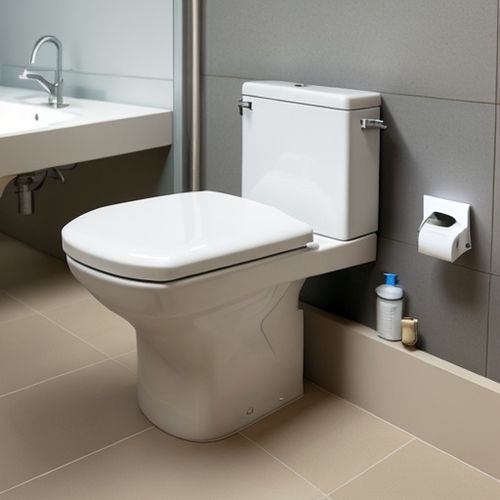
In a world increasingly focused on sustainability and water conservation, Japanese innovation has once again taken the lead with the development of tankless toilets that use just one liter of water per flush. This groundbreaking technology not only addresses the urgent need to reduce water consumption but also sets a new standard for eco-friendly bathroom fixtures. The implications of such efficiency are profound, particularly in regions facing water scarcity or for households looking to minimize their environmental footprint.
The traditional toilet, especially older models, can use anywhere from six to thirteen liters of water per flush. Even modern low-flow toilets typically require around four to six liters. By contrast, the Japanese tankless system represents a radical reduction—achieving the same results with a fraction of the water. This leap in efficiency is made possible through advanced engineering, including powerful pressurized flushing mechanisms and optimized bowl designs that ensure thorough cleaning with minimal liquid.
How does it work? Unlike conventional toilets that rely on gravity and a stored tank of water, these tankless models connect directly to the water supply. When activated, the system releases a high-pressure burst of water that effectively clears waste while using significantly less volume. The precision of this method eliminates the need for multiple flushes, a common issue with low-flow alternatives that can ironically lead to greater water usage when performance falls short.
Beyond the remarkable water savings, these toilets offer several practical advantages. Their compact design frees up valuable bathroom space previously occupied by bulky tanks. Maintenance becomes simpler without components like fill valves and flappers that frequently malfunction in traditional systems. Perhaps most importantly, they provide consistent performance that meets hygiene standards while conserving our planet's most precious resource.
The environmental impact of widespread adoption could be substantial. Consider that toilet flushing accounts for nearly 30% of a typical household's water use. If every home in water-stressed areas like California or Australia implemented this technology, the cumulative savings would amount to billions of gallons annually. Municipalities struggling with aging infrastructure and drought conditions may find this innovation transforms their approach to water management.
Japanese manufacturers have refined this technology over decades, building upon their nation's cultural emphasis on cleanliness and resource efficiency. The same technological principles that created ultra-efficient bidet functions in Japanese toilets have now been applied to revolutionize flushing mechanisms. What began as a niche innovation is now positioned to go global, with prototypes already being tested in European and North American markets.
Consumer adoption faces some challenges, primarily the higher upfront cost compared to conventional toilets. However, when factoring in long-term water bill savings—which could amount to hundreds of dollars annually for large families—the investment pays for itself surprisingly quickly. Additionally, as production scales up and more manufacturers enter the market, prices are expected to become more accessible to average homeowners.
The implications extend beyond residential use. Imagine the water savings if every office building, school, and public facility adopted this technology. In Japan, where these toilets are already common in commercial spaces, the reduction in water usage has allowed cities to better manage resources despite population density challenges. The potential for similar benefits in other urban centers worldwide is enormous.
Looking ahead, this innovation may represent just the beginning of water-saving bathroom technology. Researchers are exploring complementary systems like waterless urinals and greywater recycling to create comprehensive conservation solutions. The tankless toilet's success demonstrates how reimagining everyday objects can yield extraordinary environmental benefits without sacrificing functionality or convenience.
As climate change intensifies water scarcity issues globally, solutions like Japan's tankless toilet transition from being impressive innovations to essential tools for sustainable living. They embody the kind of practical, scalable technology that can make a real difference in our collective efforts to preserve freshwater resources. The next time you hear a toilet flush, consider that the sound might soon represent not waste, but the future of responsible water use.
By Emily Johnson/Apr 14, 2025

By Amanda Phillips/Apr 14, 2025

By Jessica Lee/Apr 14, 2025
By John Smith/Apr 14, 2025

By Thomas Roberts/Apr 10, 2025

By Amanda Phillips/Apr 14, 2025
By Michael Brown/Apr 14, 2025
By Jessica Lee/Apr 14, 2025

By Elizabeth Taylor/Apr 14, 2025

By Elizabeth Taylor/Apr 10, 2025
By Sophia Lewis/Apr 14, 2025
By William Miller/Apr 14, 2025
By John Smith/Apr 14, 2025
By Emily Johnson/Apr 14, 2025

By Emma Thompson/Apr 14, 2025
By Sarah Davis/Apr 10, 2025

By David Anderson/Apr 14, 2025
By Emily Johnson/Apr 14, 2025

By Eric Ward/Apr 14, 2025

By Eric Ward/Apr 14, 2025