Quantum Annealing

Apr 19, 2025 By Ryan Martin

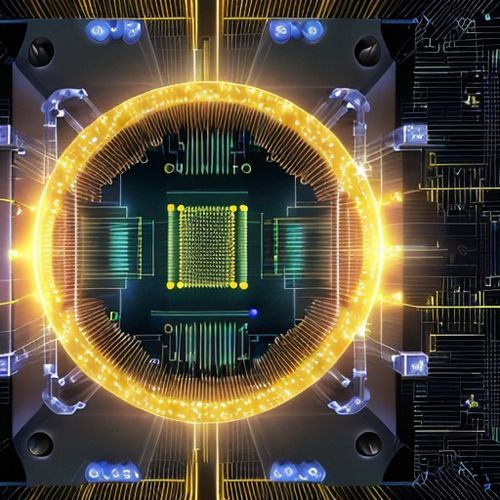
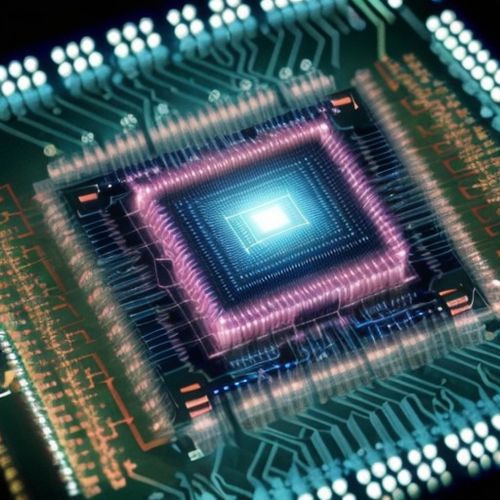
The world of quantum computing continues to push the boundaries of what we once thought possible, and at the forefront of this revolution is quantum annealing. Unlike traditional computing methods, which rely on binary bits, quantum annealing leverages the peculiar properties of quantum mechanics to solve optimization problems that would stump even the most powerful classical supercomputers. This technology has the potential to transform industries ranging from logistics to drug discovery, making it one of the most exciting developments in modern science.


Quantum annealing operates on principles that seem almost magical when viewed through the lens of classical physics. At its core, it exploits quantum superposition and entanglement to explore multiple solutions simultaneously. A quantum annealer starts with a system in a superposition of all possible states, then gradually evolves the system to settle into the lowest energy configuration, which corresponds to the optimal solution. This process is fundamentally different from classical optimization techniques, which often get trapped in local minima and require exhaustive searches.


One of the most compelling aspects of quantum annealing is its ability to tackle problems that scale exponentially with classical methods. Take, for instance, the famous traveling salesman problem, where the goal is to find the shortest possible route that visits a set of cities and returns to the origin. For a handful of cities, this is trivial, but as the number grows, the problem becomes intractable for classical computers. Quantum annealers, however, can explore all possible routes in parallel, dramatically reducing the time required to find the optimal path.


Despite its promise, quantum annealing is not without its challenges. Decoherence, or the loss of quantum information due to interactions with the environment, remains a significant hurdle. Maintaining the delicate quantum states necessary for annealing requires extremely low temperatures, often just a fraction of a degree above absolute zero. Even then, noise and imperfections in the hardware can lead to errors, limiting the size and complexity of problems that can be solved reliably.


Another critical consideration is the difference between quantum annealing and gate-based quantum computing. While both are quantum technologies, they serve different purposes. Gate-based systems, like those being developed by IBM and Google, are designed for general-purpose computing and can perform a wide range of operations. Quantum annealers, on the other hand, are specialized machines optimized for specific types of optimization problems. This specialization makes them exceptionally powerful for certain applications but less versatile overall.


The real-world applications of quantum annealing are already beginning to emerge. Companies like D-Wave Systems have partnered with organizations in finance, healthcare, and aerospace to explore practical uses of the technology. In finance, for example, quantum annealing can optimize portfolios by balancing risk and return in ways that classical algorithms cannot. In healthcare, it can accelerate the discovery of new drugs by simulating molecular interactions at an unprecedented scale.


Looking ahead, the future of quantum annealing is both promising and uncertain. Researchers are working tirelessly to improve the stability and scalability of these systems, with the hope of solving ever more complex problems. At the same time, the field faces stiff competition from advances in classical algorithms and alternative quantum approaches. Whether quantum annealing will become the dominant paradigm for optimization or remain a niche tool is still an open question.


What is clear, however, is that quantum annealing represents a bold step forward in our quest to harness the power of quantum mechanics. As the technology matures, it could unlock solutions to some of humanity's most pressing challenges, from climate modeling to artificial intelligence. For now, scientists and engineers continue to explore its potential, driven by the tantalizing possibility of what might be achieved when we fully embrace the quantum realm.

Recommend Posts
Science

Photon Chips

By Joshua Howard/Apr 19, 2025

The world of computing is undergoing a quiet revolution as photonic chips emerge from research labs into practical applications. Unlike traditional electronic chips that rely on electrons moving through silicon, photonic chips use light particles (photons) to transmit and process information. This fundamental difference promises to overcome many limitations we face with conventional semiconductor technology.
Science

Quantum Networks

By Amanda Phillips/Apr 19, 2025

The concept of a quantum network has long been the stuff of scientific dreams, but recent advancements suggest it may soon become a tangible reality. Unlike classical networks that rely on bits to transmit information, quantum networks utilize quantum bits or qubits, which can exist in multiple states simultaneously thanks to the principles of superposition and entanglement. This revolutionary approach promises unparalleled security, speed, and computational power, potentially transforming industries ranging from cybersecurity to healthcare.
Science

Cold Atoms

By Samuel Cooper/Apr 19, 2025

The field of cold atom research has emerged as one of the most exciting frontiers in modern physics, offering unprecedented opportunities to explore quantum phenomena with remarkable precision. By cooling atoms to temperatures just a fraction of a degree above absolute zero, scientists can observe and manipulate quantum behaviors that are otherwise obscured at higher energies. This cutting-edge discipline bridges the gap between theoretical predictions and experimental validations, providing insights into fundamental questions about matter, energy, and the nature of the universe itself.
Science

Transfer Learning

By George Bailey/Apr 19, 2025

In research labs from Silicon Valley to Shenzhen, a subtle but profound shift is occurring in how artificial intelligence systems are being built. Gone are the days when every AI project required training massive neural networks from scratch. Instead, researchers and engineers are increasingly turning to transfer learning - a technique that allows knowledge gained from solving one problem to be applied to different but related problems.
Science

Bionic Motion

By Ryan Martin/Apr 19, 2025

The field of bionic motion has emerged as one of the most fascinating intersections between biology and engineering, pushing the boundaries of what machines can achieve by mimicking the natural world. From robotic limbs that replicate human movement to underwater drones inspired by marine life, the applications are as diverse as they are revolutionary. This technology doesn’t just imitate nature—it learns from it, adapts to it, and in some cases, even improves upon it.
Science

Bit Coherence"

By Emily Johnson/Apr 19, 2025

The concept of bitcoherence has emerged as a fascinating intersection between quantum physics and information theory, offering new perspectives on how we might process and transmit data in the future. This theoretical framework suggests that quantum bits (qubits) could maintain their entangled states over longer distances and time periods than previously thought possible, potentially revolutionizing fields from cryptography to quantum computing.
Science

Tactile Feedback

By Elizabeth Taylor/Apr 19, 2025

The human sense of touch, often overshadowed by vision and hearing, holds a profound yet understated role in our daily interactions. From the gentle brush of a loved one’s hand to the rough texture of a brick wall, tactile feedback shapes our understanding of the world in ways we rarely pause to consider. This intricate system of receptors and neural pathways doesn’t just relay physical sensations—it anchors us to reality, influences emotional states, and even alters cognitive processes. Yet, despite its ubiquity, the science and philosophy behind touch remain fertile ground for exploration.
Science

Ion Trap

By Christopher Harris/Apr 19, 2025

The world of quantum technology has seen remarkable advancements in recent years, and ion traps have emerged as one of the most promising platforms for quantum computing and precision measurement. These devices, which use electromagnetic fields to confine charged particles, offer unparalleled control over individual ions, making them ideal for applications ranging from quantum simulations to ultra-precise atomic clocks. Unlike other quantum systems, ion traps provide long coherence times and high-fidelity operations, which are critical for building scalable quantum computers.
Science

Quantum Annealing

By Ryan Martin/Apr 19, 2025

The world of quantum computing continues to push the boundaries of what we once thought possible, and at the forefront of this revolution is quantum annealing. Unlike traditional computing methods, which rely on binary bits, quantum annealing leverages the peculiar properties of quantum mechanics to solve optimization problems that would stump even the most powerful classical supercomputers. This technology has the potential to transform industries ranging from logistics to drug discovery, making it one of the most exciting developments in modern science.
Science

Topological Quantum

By Emma Thompson/Apr 19, 2025

The world of quantum physics has always been a realm of mystery and fascination, but recent advancements in topological quantum research have pushed the boundaries even further. Scientists are now exploring how topological properties can be harnessed to create more stable and error-resistant quantum systems. This emerging field promises to revolutionize quantum computing, offering solutions to some of the most persistent challenges in the discipline.
Science

Micro-Nano

By Emily Johnson/Apr 19, 2025

The world of micro and nanotechnology continues to push the boundaries of what we once thought possible in manufacturing, medicine, and materials science. These invisible technologies operate at scales that defy human perception - where a nanometer is to a meter what a marble is to the size of Earth. Yet their impact resonates across industries, quietly revolutionizing everything from drug delivery to semiconductor design.
Science

Logic Gates

By Victoria Gonzalez/Apr 19, 2025

Logic gates are the fundamental building blocks of digital circuits, serving as the backbone of modern computing and electronics. These tiny but powerful components process binary signals, performing operations that drive everything from simple calculators to complex supercomputers. Understanding how logic gates work provides insight into the very fabric of digital technology that shapes our world today.
Science

Quantum Algorithms

By Jessica Lee/Apr 19, 2025

The world of computing is undergoing a seismic shift as quantum algorithms emerge from theoretical physics labs into practical applications. Unlike classical algorithms that process information in binary bits (0s and 1s), quantum algorithms leverage the bizarre properties of quantum mechanics—superposition, entanglement, and interference—to solve problems that would take classical computers millennia to crack. This isn’t just an incremental improvement; it’s a paradigm shift that could redefine industries from cryptography to drug discovery.
Science

Soft Machine"

By Sophia Lewis/Apr 19, 2025

The concept of soft robotics has emerged as a revolutionary field, blending the flexibility of biological systems with the precision of engineering. Unlike traditional rigid robots, soft robots are constructed from compliant materials that allow for adaptive and resilient movements. This innovation opens doors to applications where conventional robots would fail, such as delicate surgical procedures or navigating unpredictable terrains. The development of soft robotics is not just an advancement in technology; it represents a paradigm shift in how we perceive machines interacting with the world.