The field of bionic motion has emerged as one of the most fascinating intersections between biology and engineering, pushing the boundaries of what machines can achieve by mimicking the natural world. From robotic limbs that replicate human movement to underwater drones inspired by marine life, the applications are as diverse as they are revolutionary. This technology doesn’t just imitate nature—it learns from it, adapts to it, and in some cases, even improves upon it.
Nature as the Ultimate Engineer
For centuries, humans have looked to nature for inspiration, but only in recent decades have we developed the tools to truly replicate its genius. The efficiency of a bird’s flight, the agility of a cheetah’s sprint, or the undulating motion of a fish’s tail—these are all marvels of evolution that engineers strive to emulate. Bionic motion takes these principles and applies them to robotics, prosthetics, and even transportation systems. The result? Machines that move with unprecedented grace and efficiency.
One of the most striking examples is the development of prosthetic limbs that respond to neural signals, allowing amputees to regain near-natural movement. These devices don’t just replace lost limbs; they restore a sense of autonomy and fluidity that was once thought impossible. Similarly, robotic exoskeletons are being designed to enhance human strength and endurance, drawing inspiration from the musculoskeletal systems of insects and mammals.
The Rise of Bio-Inspired Robotics
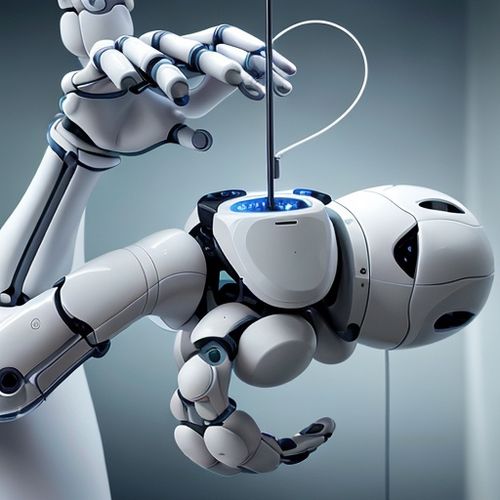
Robotics has long been dominated by rigid, mechanical movements, but bionic motion is changing that. Soft robotics, a subfield heavily influenced by biological systems, uses flexible materials to create robots that can bend, stretch, and adapt to their environments. Imagine a robotic arm that can gently pick up a fragile object without crushing it, or a search-and-rescue robot that can slither through rubble like a snake. These innovations are not just theoretical—they’re already being tested in real-world scenarios.
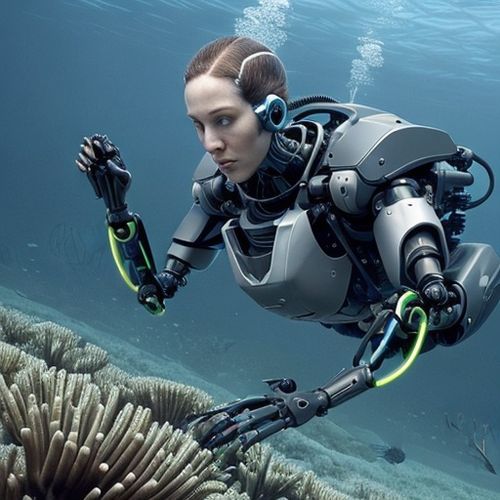
Underwater exploration is another area where bionic motion shines. Traditional submarines and drones are limited by their bulky designs, but bio-inspired underwater vehicles mimic the streamlined forms of fish and cephalopods. These machines are quieter, more energy-efficient, and capable of navigating complex aquatic environments with ease. Researchers are even studying the movement of jellyfish to develop drones that can monitor ocean health without disturbing marine ecosystems.
Challenges and Ethical Considerations
Despite its promise, bionic motion is not without challenges. Replicating the complexity of natural movement requires advanced materials, sophisticated algorithms, and a deep understanding of biomechanics. Energy efficiency is another hurdle—many biological systems are far more economical in their use of energy than their artificial counterparts. Engineers are constantly experimenting with new materials, such as shape-memory alloys and self-healing polymers, to bridge this gap.
Ethical questions also arise as the line between human and machine blurs. Should bionic enhancements be available only to those who need them for medical reasons, or should they be accessible to anyone seeking to augment their abilities? And as robots become more lifelike, how do we ensure they are used responsibly? These are debates that will shape the future of bionic motion.
The Future: Where Biology Meets Technology
The potential of bionic motion is limitless. In the coming decades, we may see self-repairing materials that mimic the regenerative abilities of starfish, or drones that fly in perfect formation like migratory birds. The integration of artificial intelligence with bionic systems could lead to machines that not only move like living creatures but also learn and adapt in real time.
What’s clear is that bionic motion is more than just a technological trend—it’s a paradigm shift in how we approach design and engineering. By looking to nature for guidance, we are unlocking solutions to some of the most pressing challenges in robotics, medicine, and beyond. The future of motion is not just mechanical; it’s alive with possibility.

By Joshua Howard/Apr 19, 2025

By Amanda Phillips/Apr 19, 2025

By Samuel Cooper/Apr 19, 2025

By George Bailey/Apr 19, 2025
By Ryan Martin/Apr 19, 2025

By Emily Johnson/Apr 19, 2025
By Elizabeth Taylor/Apr 19, 2025

By Christopher Harris/Apr 19, 2025

By Ryan Martin/Apr 19, 2025

By Emma Thompson/Apr 19, 2025

By Emily Johnson/Apr 19, 2025

By Victoria Gonzalez/Apr 19, 2025

By Jessica Lee/Apr 19, 2025
By Sophia Lewis/Apr 19, 2025